







My Adventure with Chicken Pirate: A Player’s Review and Survival Guide
When I first stumbled across Chicken Pirate, I honestly wasn’t sure what to expect. The name alone had me curious — I mean, a pirate-themed crash slot with a chicken at the helm? Sounds ridiculous, right? But ridiculous in a good way. I clicked into the demo almost as a joke, and then… well, two hours disappeared.
What surprised me most is that Chicken Pirate isn’t your usual slot. There are no reels, no paylines, no free spins cluttering up the screen. Instead, the whole game revolves around a multiplier that keeps climbing while you decide when to jump ship. If you cash out in time, you pocket your winnings. Wait too long, and the ship sinks — or rather, the chicken crashes it.
Let me walk you through what it’s like to play, what I learned (the easy way and the hard way), and some strategies that made my time with Chicken Pirate fun instead of frustrating.
First Impressions: Why This Game Hooked Me
I’ve played my fair share of online slots, from the flashy big-name titles to the indie games that look like they were coded in someone’s basement. Chicken Pirate sits right in the middle: it looks polished, but it doesn’t take itself too seriously.
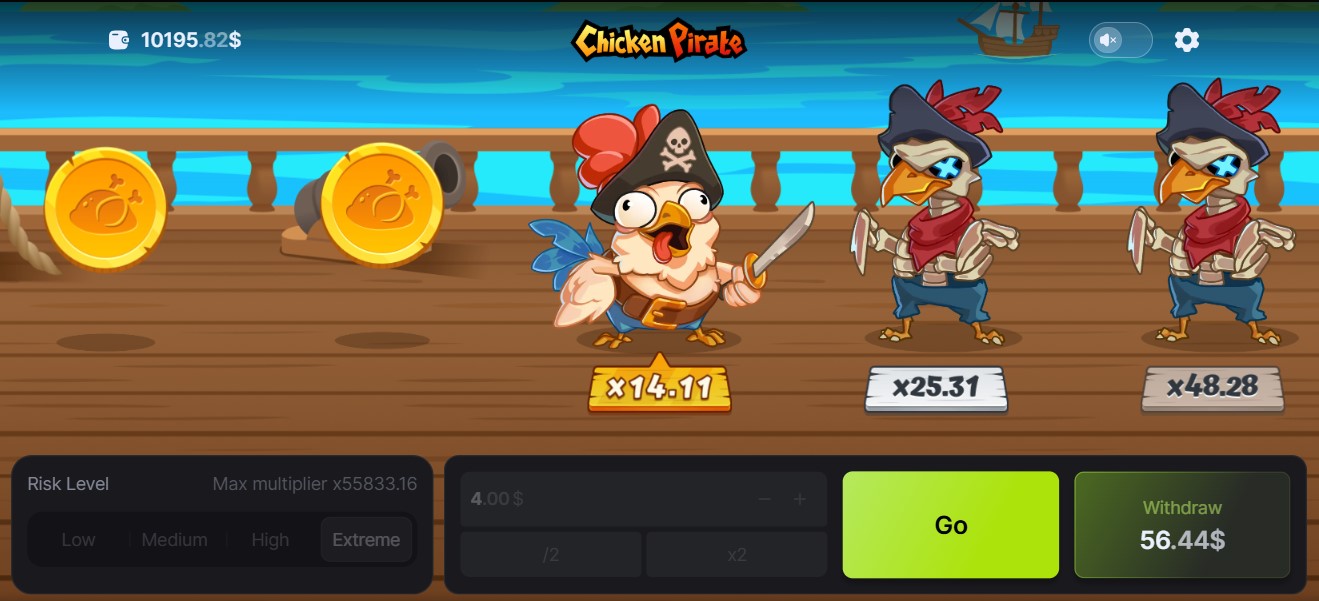
The design is cheeky — a cartoon chicken in a pirate hat steering a ship, treasure chests popping up, explosions when the crash happens. It’s lighthearted, which is exactly what I needed after grinding through more traditional slots that start to blur together.
The pacing also hooked me. Rounds are short, just a few seconds each, which makes it dangerously easy to say, “just one more.” Spoiler: “just one more” can turn into fifty more real quick.
How It Works (In Plain English)
Here’s the gist of Chicken Pirate:
- You place a bet before each round starts.
- A multiplier begins at 1.0x and climbs higher and higher.
- At any point, you can hit “Cash Out” and lock in your winnings.
- If the chicken crashes before you cash out, you lose your bet.
It’s simple — almost too simple — but that’s the beauty of it. Unlike slots where you have to memorize what counts as a “line win” or keep track of scatters, here you’re just making one decision: do I hold, or do I bail?
And believe me, that one decision can feel way more intense than waiting for reels to stop spinning.
My Learning Curve
When I first played, I made the rookie mistake of chasing the big multipliers. I thought, “If I can just wait it out until x20 or x50, I’ll score huge.” Spoiler again: I crashed. Repeatedly.
The truth is, Chicken Pirate isn’t about greed. It’s about timing and knowing when to settle for a modest win. After losing a few demo rounds (thank god it wasn’t real money yet), I realized that the safest way to build a bankroll is to aim for smaller multipliers — like x1.5 or x2.
Sounds boring? Maybe. But cashing out consistently at x2 feels surprisingly good, especially after watching yourself lose three bets in a row by holding out too long.
Playing on Mobile vs Desktop
Most of my time was on mobile, lying on the couch with one thumb on the screen. The interface is smooth, the animations run without lag, and it’s easy to hit “Cash Out” quickly.
On desktop, it feels a little more strategic, almost like watching a stock chart climb. I’d say mobile is best for quick fun, but if you’re planning a longer session and want to take it more seriously, desktop gives you a clearer overview.
Features That Stand Out
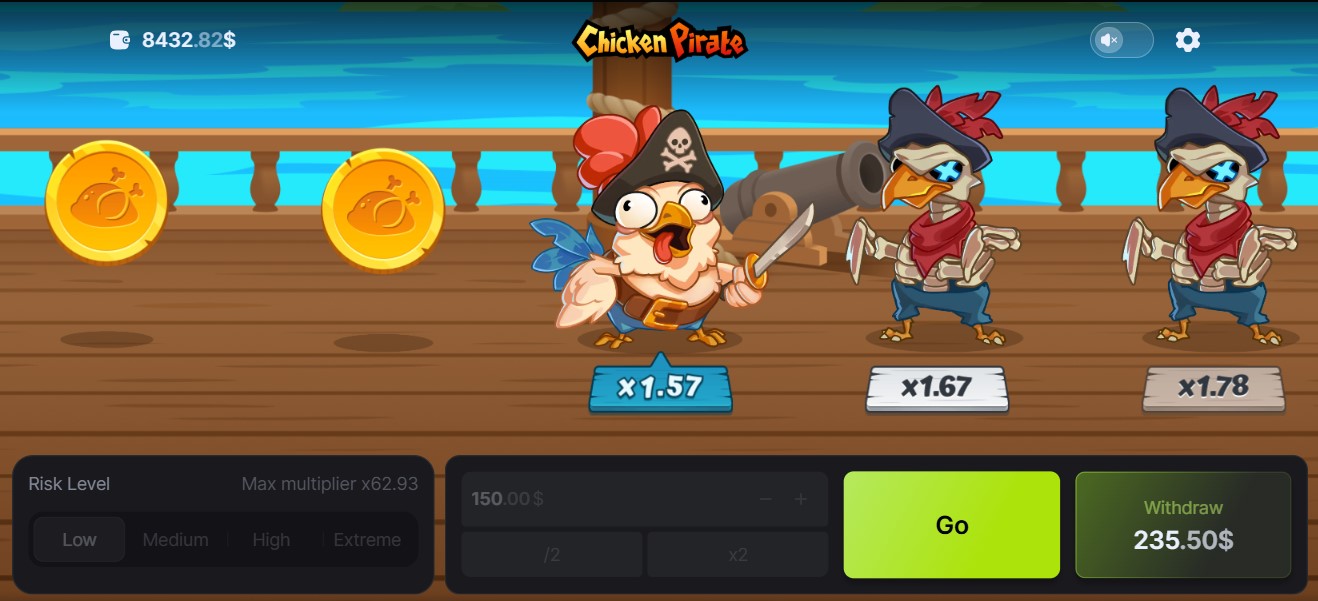
- Auto Cash-Out: I used this a lot after getting burned too many times. Setting it at x2 or x3 takes away the panic of deciding in the moment.
- Auto Bet: Handy if you want to run the same stake over and over without clicking like a maniac.
- Theme & Humor: I mean, it’s a pirate chicken. Watching it crash never stops being funny, even when it’s my bet that goes down with the ship.
- Demo Mode: Honestly, this saved me. I spent about an hour just playing for free, figuring out my rhythm before risking real money.
Strategies I Tried
Let’s be real: no strategy can beat pure randomness. The crash is unpredictable, and anyone promising you a guaranteed method is full of it. But here’s what worked for me:
The Steady Climb Strategy
- Bet small.
- Cash out at x2 consistently.
- Slow, steady, less stress.
This turned out to be the best for stretching my session and feeling in control.
The YOLO Round
- Every now and then, I’d risk it and let the multiplier climb past x10.
- Sometimes it worked, and those moments felt incredible.
- Most times, though… crash.
Still, the adrenaline rush is half the fun.
Split Betting
- Some platforms let you place two bets at once.
- I’d set one to auto cash-out at x2 and let the other ride.
- This gave me security plus the chance to score big.
Bonuses and Casino Perks
While the game itself doesn’t have free spins or mini-games, the casinos that host Chicken Pirate often throw in bonuses:
- I got a 100% deposit match when I first signed up.
- Weekly cashback promos softened the sting of losing streaks.
- Some even offered free demo credits so I could practice without touching my bankroll.
If you’re going to play Chicken Pirate, definitely shop around for these extras. They make a difference.
Lessons I Learned (The Hard Way)
- Don’t Chase Losses: If you hit a streak of crashes, walking away is smarter than doubling down.
- Short Sessions are Better: The game is addictive. Setting a timer helped me avoid losing track of time.
- Greed is the Enemy: I can’t stress this enough. The moment you think, “just one more second,” is the moment you lose.
Why I Keep Coming Back
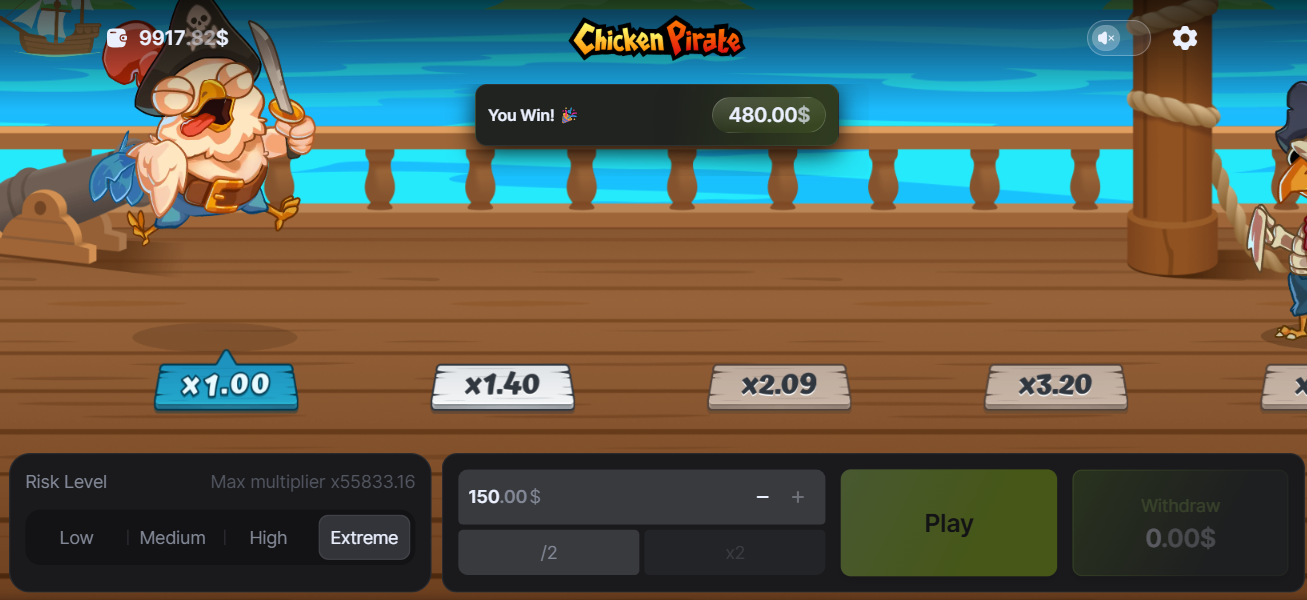
It’s not about giant jackpots or flashy graphics. For me, Chicken Pirate is fun because it’s fast, unpredictable, and a little ridiculous. Every round feels like flipping a coin, but with a chicken captain guiding your fate.
It scratches the itch when I want something more interactive than a slot but less complicated than poker or blackjack. And yeah, sometimes it makes me want to pull my hair out, but that’s part of the thrill.
Final Thoughts
Chicken Pirate isn’t for everyone. If you prefer slow-paced games with lots of features and long animations, this might feel too chaotic. But if you like high-energy, quick-fire decisions — and don’t mind laughing at a cartoon chicken blowing up your bet now and then — it’s worth trying.
My advice? Play the demo first, figure out your comfort zone, and remember that the real treasure is knowing when to quit.